
Exclusive interview: Max Wilkinson on NIGHT CITY at Southwark Playhouse Borough
 Shehrazade Zafar-Arif
17 September, 2026, 12:29
Shehrazade Zafar-Arif
17 September, 2026, 12:29
Night City, Max Wilkinson’s epic, darkly funny portrait of London’s gig economy, runs at Southwark Playhouse Borough until 3 October. Six years ago the playwright saw the aftermath of a collision at Bricklayer’s Arms — the rider gone, the bike and broken glass still in the road — and that became the play’s first image. He answered our questions exclusively for London Box Office.
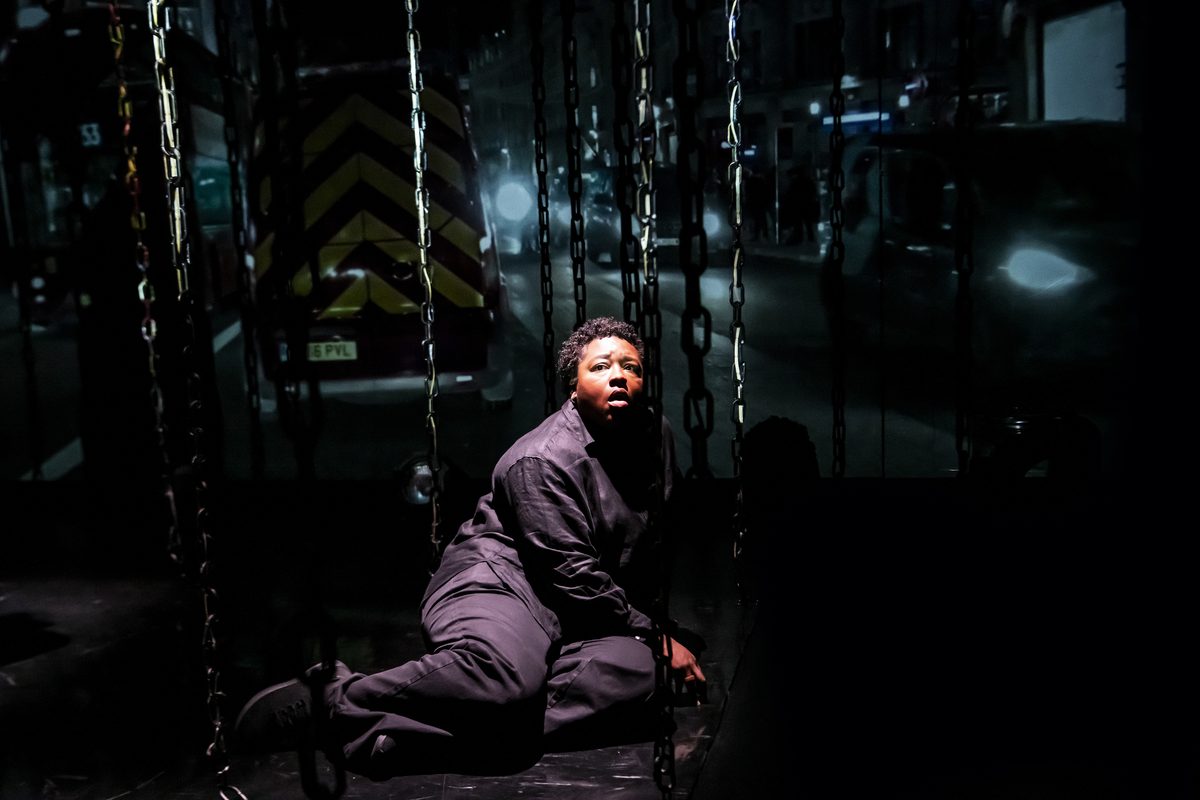 Night City at Southwark Playhouse Borough. Photo by Lidia Crisafulli
Written by Max Wilkinson, directed by Ebenezer Bamgboye and produced by Clarisse Makundul Productions, Night City follows three people working through the small hours: Jack, a ride-share driver; Tamara, a home care worker; and an aspiring writer waiting tables. It runs in ‘The Little’ auditorium at Southwark Playhouse Borough from 9 September to 3 October 2026, lasts 100 minutes, is recommended for ages 14+, and tickets start at £22 (£18 concessions). Our own review of Night City is here.
We put nine questions to Max. These are his answers.
The image that started it
You have described the aftermath of a collision at Bricklayer’s Arms — a delivery driver hit by a truck, glass across the road — as “the first image of Night City”. What was it about that moment that stayed with you for six years and eventually demanded a play rather than an article or a screenplay?
It’s the fact that the broken moped and shreds of their bag and broken glass was scattered about but the rider had been removed. It was anonymous, slightly pathetic and tragic, like a faded chalk line of a body.
Great question. I love images in plays and I don’t think playwrights exploit them enough. We’ve got this Greek or Chekhovian standard of what a play is and that’s fine and I like a lot of those plays, but I’m rubbish at them: the locked room play. My plays now use monologue and movement and music to create something more cinematic. I know it’s sacrilege but I think theatre should increasingly borrow and steal from cinema and new visual media. To keep it relevant. And you can tell bigger stories that way too.
The three stories
Night City follows a ride-share driver, a home care worker and an aspiring writer waiting tables. What made those three the right way in, and was there a fourth story you tried and cut?
So I was fascinated by these three characters separately at first. I think it was the taxi driver, Jack, first. I had this image of a loud-mouthed, cheap speed addicted, hedonist who never slept and was sort of, in a twisted, sordid way, perfect for the gig economy because he had no family connection, no concrete purpose. But he had a lot of fun. Then the waitress, Tia, popped into my mind and this sort of comic-tragic idea of someone coming to London who had read all these detective and romantic novels and wanted to turn the Caffè Nero where she worked into Paris in the 20s. Then I started to build this much bigger story, and thought who am I missing out? I started to learn about the privatised care sector through my aunt who worked for one of these care companies: that seemed the missing piece. To tell a big, tragic, absurdist tale of modern work.
No, not a fourth story! Although there’s a hilarious, bonkers heiress in there with a death wish who sort of becomes one… anyway, go watch it and see!
The care worker’s thread draws on conversations with family members in care and nursing. How do you write about people close to you without them feeling reported on?
I’ve always done that, and drawn on my own experiences. The characters end up being such an amalgamation of things, of hundreds of characters and lines you’ve overheard on the bus, that it never feels like a direct representation of them. So hopefully they don’t feel reported on haha.
The three stories intersect. Was that structure there from the start, or did it emerge when you realised something about how these jobs actually connect in a city?
They started out as three separate characters but then I realised how much their lives could intersect. Jack, the hedonistic taxi driver, was always going to befriend Tia, the waitress and budding writer, but that became so much deeper. And Tamara, the carer, whose story is more separate, still, in the end, makes a fatal error that is no way her fault, which throws all of their lives into a political storm. And then there are little intersections too.
But yes, it’s still ultimately one epic singular story that drifts about a bit! But I love that about plays or novels: you can be way more loose with structure than, say, a film.
Writing from the inside
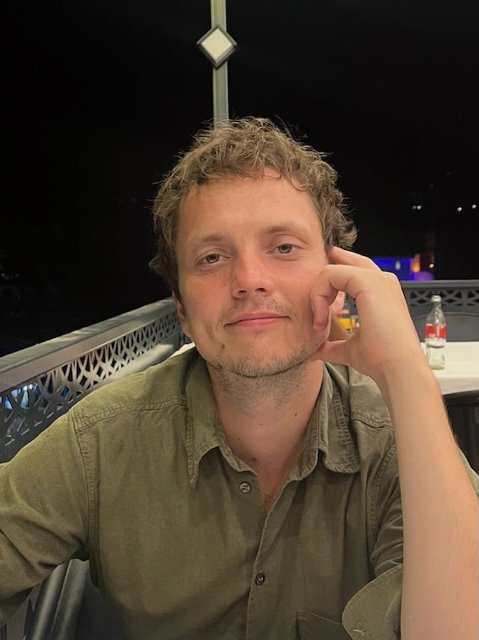 Max Wilkinson, writer of Night City
You worked in retail, service, stage crew and with a tree surgeon into your mid-twenties. Which of those jobs turned out to be most useful to you as a writer, and not necessarily the one that gave you the most material?
It’s a good question. Probably the more physical jobs, like crewing (lugging equipment about) and tree-surgeon-ing. A lot of the service jobs, like waiting tables or bars, obviously have their own problems but these more physical jobs toughen you up and give you perspective. It’s always scary and mentally exhausting writing for 10 hours in the day. But getting up at 5am or working through the night with no choice and getting paid peanuts; waiting around in the cold for the next shift. Being invisible. That’s a hell of a lot harder.
Theatre itself runs on freelance and short-contract labour. Did writing this play change how you see the industry staging it?
Not really, to be honest. I worked in all kinds of gig jobs, like lots of us, and lots of those were in the theatre or the arts or teaching and you realise how precarious it all is. Because this ‘gigging’ system isn’t just taxi rides and deliveries. It enters into all our working lives, this pervasive, algorithmic system of insecure contracts and precarious hours, terrified of standing up to bosses because they’ll just book someone else in, drowning in admin and anonymous online profiles, and extra work we’re never paid to do.
So I hope all kinds of people will come see Night City and feel some catharsis.
Getting it right
There is a real risk in this subject of a play that makes an audience feel virtuous for two hours and changes nothing. How did you guard against that?
100%. And I hate browbeating, moralistic plays. Of course, Night City has a big political argument to it but I wrote it to mostly record a new emerging world that is alarming, and strange, but also very funny and absurd. But at its core, the play’s about humanity versus de-humanising systems. But gives no clear answers. Just hopefully paints a reasonably accurate picture of an ever expanding new weird world of work.
For an audience deciding whether to book
Someone books a ticket after a long shift of exactly the kind of work this play is about. What do you want them to get from the evening?
Honestly, and I know it sounds trite, but to have a really good time. People who like their theatre to be big and explosive and cinematic. We’ve got movement, singing, a big clubby soundtrack. People who like a tapestry of different characters and stories and lots of laughs until the laughter stops and the play becomes this big political story of David and Goliath. Of small, disparate voices against corporate greed.
So a lot really! But to feel rather than think. And yes, enjoy themselves.
Night City opens at Southwark Playhouse Borough, a theatre with a real record on new writing and early-career talent. What does that particular room give the play that another might not?
I love the Southwark Playhouse and a lot of our team has worked with them before. They champion new writing and bolder work. They’re always expanding rather than contracting. There’s no better place for the show.
Night City runs at Southwark Playhouse Borough until Saturday 3 October 2026.
Latest News
 Exclusive interview: Max Wilkinson on NIGHT CITY at Southwark Playhouse Borough
17 September 2026 at 12:29
Exclusive interview: Max Wilkinson on NIGHT CITY at Southwark Playhouse Borough
17 September 2026 at 12:29
 TITANIQUE announces final performance date in West End
17 September 2026 at 11:57
TITANIQUE announces final performance date in West End
17 September 2026 at 11:57
 Review: THELMA & LOUISE at Young Vic
17 September 2026 at 00:28
Review: THELMA & LOUISE at Young Vic
17 September 2026 at 00:28
 Review: MILLION DOLLAR QUARTET at The Arts at Marble Arch
16 September 2026 at 18:30
Review: MILLION DOLLAR QUARTET at The Arts at Marble Arch
16 September 2026 at 18:30