
Review: SHERLOCK HOLMES at Regent's Park Open Air Theatre
It was truly the worst day for outdoor theatre, with heavy showers all morning resulting in a very damp and chilly amphitheatre at Regent’s Park Open Air Theatre on Press Night. But this air of gloom only served to further immerse us into the foggy Victorian London of Sherlock Holmes, becoming the perfect backdrop for this dark, thrilling, clever, and breath-takingly chaotic play.
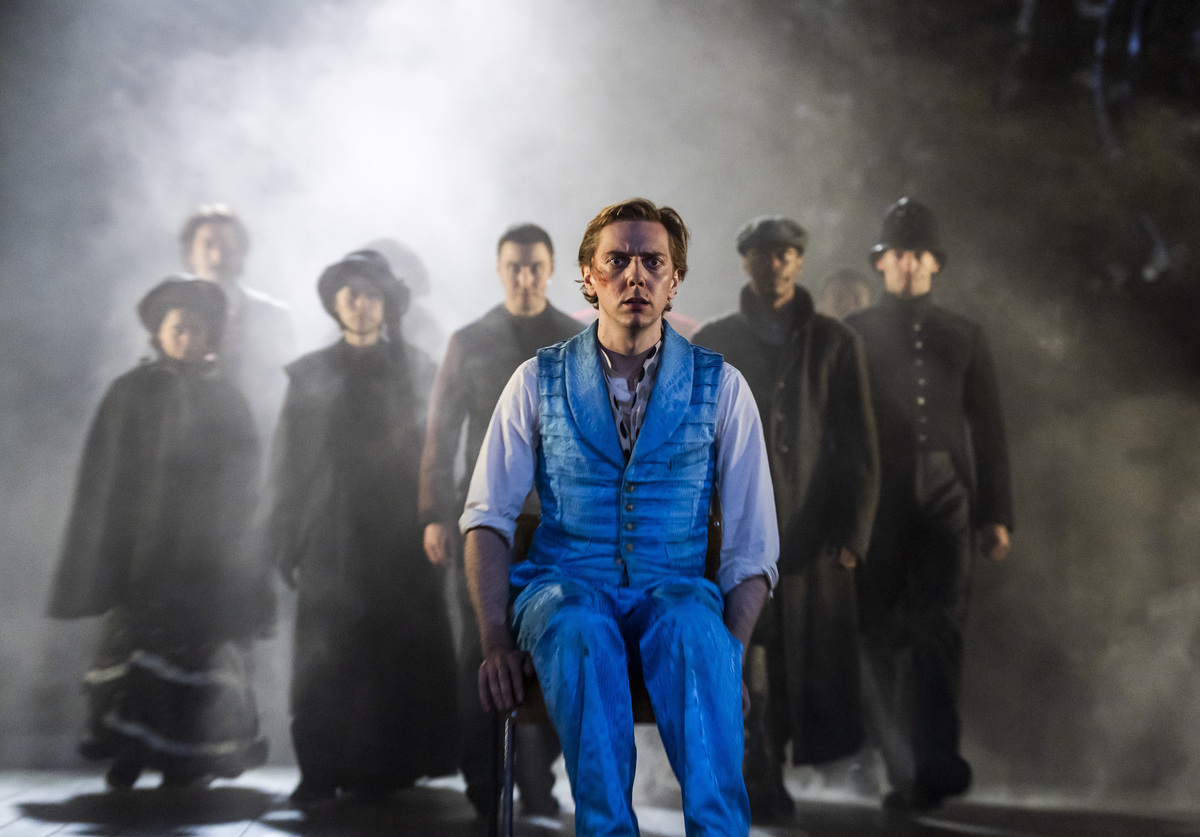 Joshua James in Sherlock Holmes. Photo by Tristram Kenton.
Written by Joel Horwood and directed by Sean Holmes, this new original Sherlock Holmes mystery is loosely based on The Sign of Four, the second Sherlock Holmes novel by Arthur Conan Doyle. The year is 1890, and Holmes is riding the high of his first successful case. When Mary Morstan, a governess and the illegitimate biracial daughter of a colonial administrator, arrives with a mysterious jewel and an even more baffling message claiming that she’s been wronged, Holmes and Watson are pulled into a plot involving multiple mysterious events around London, including a missing treasure, multiple murdered civil servants, stolen government documents, and a conspiracy to topple the British Empire.
The play begins not with Holmes and Watson, but with the 1857 Indian Mutiny (or the First War of Independence, as the people of the subcontinent refer to it), setting the tone for a story that investigates empire and colonialism in ways that feel unapologetically modern while still steeped in the play’s historical context. “That treasure isn’t free wealth, it’s stolen history,” Holmes points out, regarding the treasure chest of Mughal loot at the heart of the mystery, supposedly cursed to torment those who stole it. An innocent immigrant woman charged with the murder of British officials is labelled a “terrorist” by an aggressive, xenophobic judge, a “threat from within” for the British people, in language that feels starkly relevant to the rise of far-right sentiments in modern Britain. This social commentary doesn’t feel out of place within the confines of the play, and we often find ourselves sympathising with the so-called villains of the story. Mervin Noronha as Azad/Tonga deftly straddles the line between menacing and sympathetic, seamlessly switching between English and Hindi in his few but proudly defiant scenes.
But of course, the heart of the play is really the dynamic and relationship between Holmes and Watson, brought to life by the delightful chemistry and rapport between Joshua James and Jyuddah Jaymes. James as Holmes is flippant, manic, with razor-sharp sarcasm and a touch of flamboyance - Mrs Hudson likens him to Oscar Wilde - while Jaymes as Watson is earnest and comically exasperated with his antics, but not reduced to a doddering sidekick as in other adaptations, playing a vital role in the investigation. As they navigate their own often turbulent friendship, they also represent two sides of a philosophical debate, with Holmes representing cynicism and Watson representing idealism, playing out in arguments woven seamlessly through the action without detracting from it. Their comedic timing is also especially on point in their scenes together. The rest of the cast plays off the two leads equally well, from Nadi Kamp-Sayfi's plucky Mary to Patrick Warner's stiff-lipped Mycroft to Will Brown's boorish Lestrade.
The other high point for me was Grace Smart’s set design, which features a minimalist yet dynamic stage, revolving when the characters are in a taxi, a boat, or the newly constructed Underground, and fills with dry ice to create the effect of a foggy London. The stage is also exposed on all sides, so you can see actors and stage hands approaching in the periphery, which feels delightfully meta and creates the sense of London operating in an industrial and theatrical machine - which is how Mycroft describes the British Empire, a show of smoke and illusions that props up the whole system. The most striking visual element of the set is the crumbling proscenium arch with an overhead platform that looms over the stage. It acts as a bridge for characters to cross, becoming a crucial location of the action-packed climax, and also a courtroom bench for a judge to announce the accused’s death sentence, becoming an oppressive symbol of the empire itself.
Smart makes clever use of the space, and of the park around it, with the foliage rustling menacingly when Holmes and Watson are racing through Regent’s Park at night. The script is aware of and playfully pokes fun at its surroundings, with a cabbie making a quip about Regent’s Park being full of dodgy characters. The prevalence of the natural landscape encroaching on the theatre also suggests a tension between nature and the manmade structures of industrial Britain. Between this and 221B Baker Street being only a stone’s throw away, one might think this production couldn’t work quite as well anywhere else but Regent’s Park Open Air Theatre.
The stage hands and ensemble cast often wear animal masks, in a nod to the escaped zoo animals in the story, as well as the proximity to London Zoo in Regent’s Park. Symbolically, it also plays into the theme of masks and illusions, and creates an otherworldly, fantastical atmosphere that is both mystical and theatrical. There’s a strong sense of spectacle throughout the play, culminating in a fantastic scene at a Victorian circus filled with sword swallowers and fire eaters. It's a clear commentary on the exotification of the East in Victorian Britain, but it's also thrillingly entertaining. Other moments, such as the dance sequence that opens the play, feel a little more jarring and disruptive to the flow of storytelling.
The mystery itself is fast-paced and a little chaotic, with countless moving parts and clues dropped early in the play only to pay off later, and if you don’t pay close attention you may miss out on some crucial elements of the plot. Dizzying as it may be, it’s also breath-takingly thrilling to behold, especially during moments when we see a visual representation of Holmes’s deductive powers play out onstage with theatrical flair: characters rise from the dead to reenact a murder scene as he goes over past events. It’s a clever way to display the detective’s brilliant mind at work within a visual medium.
The play is packed with nods to the Sherlock Holmes canon, and it's clear that Horwood and Holmes are having fun playing in Conan Doyle's sandbox, while also using the familiar mythos to tell an original story for modern British audiences. And they couldn't have chosen a better space in which to set it.
Latest News
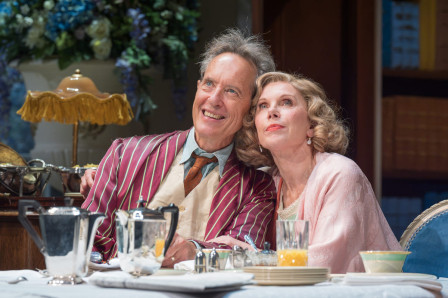
 Production photos released of Christine Baranski and Richard E Grant in HAY FEVER
28 September 2026 at 17:58
Production photos released of Christine Baranski and Richard E Grant in HAY FEVER
28 September 2026 at 17:58
 Winners announced for the 2026 Stage Debut Awards
28 September 2026 at 13:42
Winners announced for the 2026 Stage Debut Awards
28 September 2026 at 13:42
 10 Best New Theatre Openings in October 2026
25 September 2026 at 14:00
10 Best New Theatre Openings in October 2026
25 September 2026 at 14:00

 Review: THE URMETAZOAN at Hampstead Theatre
25 September 2026 at 11:09
Review: THE URMETAZOAN at Hampstead Theatre
25 September 2026 at 11:09