
Review: MILES at Southwark Playhouse (Borough)
A young jazz trumpeter (Jay Phelps) who is about to lose his record deal, delves into the studio’s archives in search of inspiration and perhaps for an explanation of how, over two sessions in 1959, Miles Davis (Benjamin Akintuyosi) managed to create Kind of Blue, the jazz album which continues to be cited as the greatest ever recorded. Such is the set-up and premise of writer/director Oliver Kaderbhai’s MILES, which has just begun a London run at Southwark Playhouse and which is set to continue until 7th March.
 Benjamin Akintuyosi in MILES. Photo by Colin J Smith.
As the young devotee listens to recordings while flexing his own embouchure, Davis springs to life, taunting his acolyte’s lack of mastery and depth, speculating that it stems from trying to please the studio suits. Thereafter follows a combative yet often revealing homage to Davis in all his fallibility. We learn of his relatively privileged upbringing, of time spent studying at Juilliard, and his early adoration of Charlie “Bird” Parker. Later, we learn how doors opened easily as he developed his playing abilities and eventually how he became fundamental to the development of key movements and genres in the world of jazz. We also delve into the dark and destructive vices that plagued so many creative names of the period, particularly through drug and alcohol addiction, and most especially the sweet and sticky seductive qualities of heroin. As the audience enters the space, a man is draped over the top of a baby grand piano. Later, this image is revisited during Davis’s eight day cold-turkey attempt to get clean after returning to St Louis.
At various intervals, Colin J Smith’s video projections appear on the set’s backdrop. In the main, the clips are of significant individuals with whom Davis played, and the snippets act as a roll call of greats, including the aforementioned Bird, Thelonius Monk, Dizzy Gillespie, John Coltrane, Paul Chambers, Jimmy Cobb, Clark Terry and others. It is respectful and adulatory but never veers into suggesting the men were establishment figures or mainstream. These cool cats were always on the periphery, even when occasionally, like pianist Bill Evans, they were white exponents of the art form. Unfortunately, while the idea of the projections is a good and engaging one, the execution (onto a dark and irregular surface) proves problematic here, and a lot of the visual impact is lost as a result.
What is not lost, however, is the magic of the recordings, ably supported by Akintuyosi’s perpetually smoking, instantly recognisable vocal delivery. While he speaks with a rich tone in the sections dealing with Davis’s early experiences, he instantly switches to the reedy and rasping voice known to millions when reflecting on his later career. Surprisingly, the reason for the marked change in timbre, was given scant coverage in the piece. For completeness, Davis underwent an operation to remove larynx polyps in the mid-1950s. While the procedure had been deemed a success, instead of adhering to the full period of convalescence, Davis exploded at a studio executive in the days immediately after the operation causing severe and irreparable damage to his vocal cords. Those artistic temperaments! Phelps too adds considerable heft to the evening and is clearly an experienced and skilful musician. For all its seemingly specialist appeal (Jazz trumpet isn’t to everyone’s taste) MILES proves an enlightening and thoroughly entertaining delve into the extraordinary and sometimes murky jazz realm.
The play runs 90 minutes straight through without an interval, but the challenge now is for the creative team to find a way of shortening that by 10-12 minutes to sharpen and maintain the energy and audience engagement, which by the end had very slightly begun to flag. As criticisms go, it is a small one in an evening which manages to prove both louche and dynamic.
Latest News
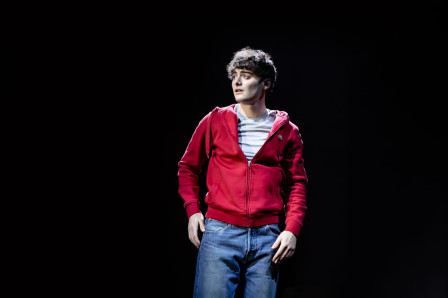
 Production photos released for world premiere of AFFLUENZA
2 October 2026 at 14:53
Production photos released for world premiere of AFFLUENZA
2 October 2026 at 14:53
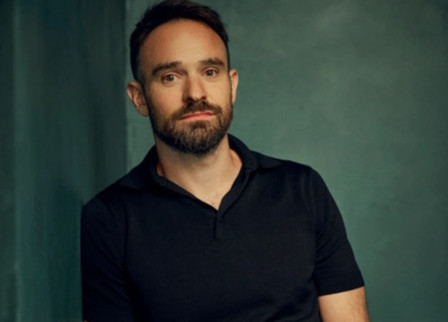 Charlie Cox to star in world premiere of THE KING'S RANSOM
2 October 2026 at 14:02
Charlie Cox to star in world premiere of THE KING'S RANSOM
2 October 2026 at 14:02
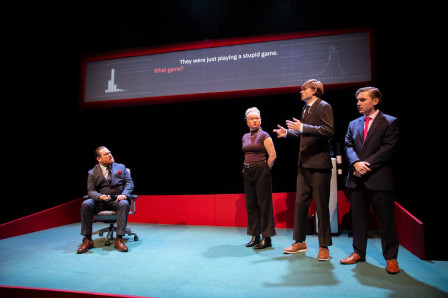
 Review: BULL at Park Theatre
1 October 2026 at 23:51
Review: BULL at Park Theatre
1 October 2026 at 23:51
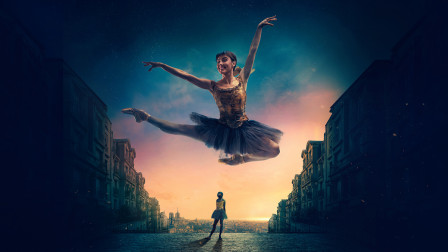 New musical LITTLE DANCER to have West End premiere in 2027
1 October 2026 at 16:38
New musical LITTLE DANCER to have West End premiere in 2027
1 October 2026 at 16:38