
Review: JAJA'S AFRICAN HAIR BRAIDING at the Lyric Hammersmith
The mood of the audience at the Lyric Hammersmith on press night was utterly electric - no surprise, with a cast whose charm, comedic timing, and energy was nothing short of infectious. Monique Touko and Jocelyn Bio’s Jaja’s African Hair Braiding, while very American as a story, undeniably resonated just as much with British audiences.
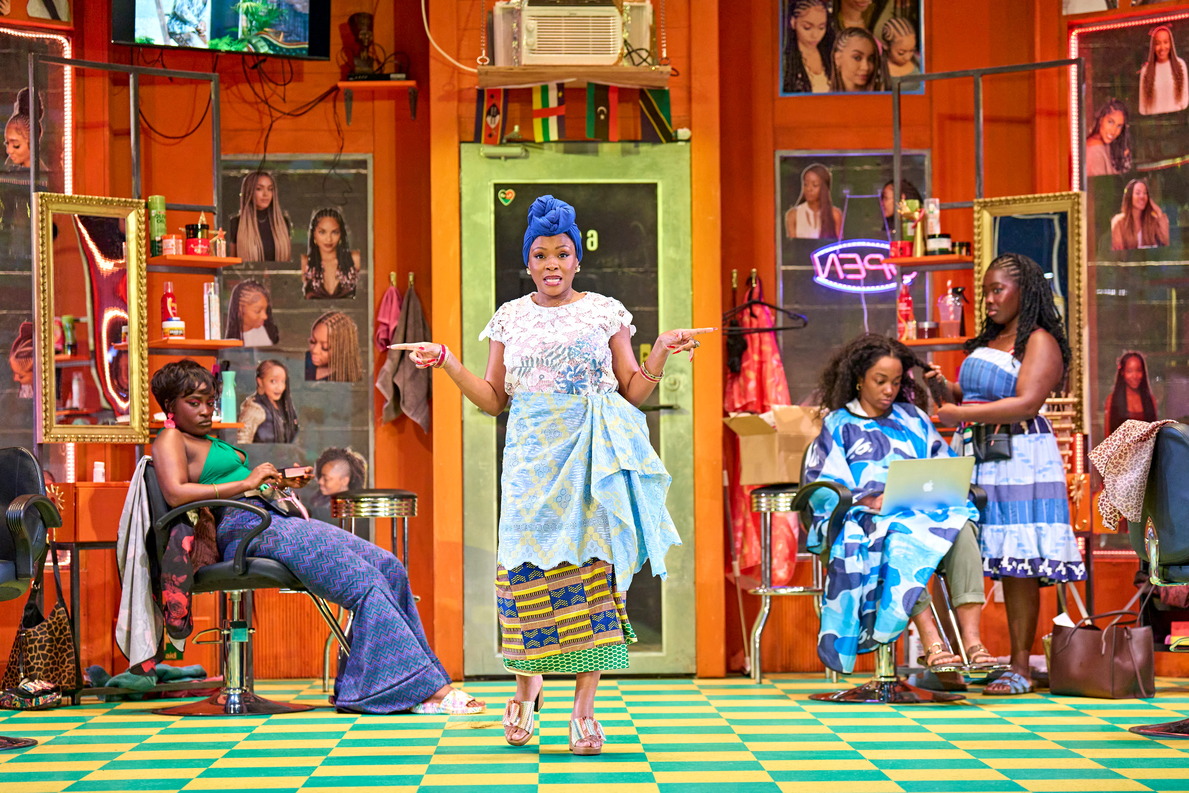 babirye bukilwa, Dolapo Oni, Karene Peter, and Jadesola Odunjo in JAJA'S AFRICAN HAIR BRAIDING. Photo by Manuel Harlan.
The play takes place at the titular Jaja’s African Hair Braiding salon over the course of a single day. Customers come and go, the stylists bicker and banter, and women share their stories and hopes for the future. But something is different today: Jaja (Zainab Jah), the owner of the salon, is getting married, while her teenage daughter Marie (Sewa Zamba) is vehemently against it.
The play’s greatest strength lies in its characters, each one utterly unique, memorable, and loveable in their own way, brought to life by a truly fantastic cast. babirye bukilwa as Aminata and Dolapo Oni as Bea are both witty and fiery, quick to voice their disapproval over Jaja's marriage to her white boyfriend Steven, and just as quick to call out each other’s flaws. Equally entertaining is Bea’s bitter rivalry with confident newcomer
Ndidi (Bola Akeju), who unapologetically poaches one of her usual customers. Demmy Ladipo is also a scene stealer, bursting into the salon at various
intervals as different characters, from a jewellery salesman in love
with Ndidi to Amanita’s sleazy husband.
Bit by bit, the interpersonal dynamics and politics of the salon are revealed to us in ways that make the characters and their setting feel deeply authentic. The rapid-fire dialogue seamlessly blends humour with the emotional depth of the weightier topics the play delves into, in a way that never feels unnatural. There’s a fun sense of anticipation whenever a new customer walks through the doors, bringing a new and vibrant personality into the dynamic, whether it’s a woman who insists she wants to look like Beyonce or a difficult customer who brought her own products. The picture that’s painted feels immediately recognisable to anyone who’s frequented braiding salons. Cynthia De La Rosa’s wig designs not only showcases the dizzying range
of braids on display, from box braids to cornrows to Beyonce’s Lemonade
braids, but subtly reminds us of the significance of hair and the act of
braiding to Black culture.
Paul Wills’ set design also adds to the sense of vivid authenticity, creating an immersive, intimate space with bold colours, pleasantly cluttered with posters and trolleys laden with styling equipment. There’s an air conditioner that’s constantly on the fritz and a TV playing Afrobeats music videos and Nollywood films, each detail perfectly designed to enrich the sense of world-building. Simisola Majekodunmi’s sound design incorporates an energetic Afrobeats soundtrack, with scene transitions punctuated by bursts of song that the characters dance along to. It creates an undeniably fun, inviting atmosphere. One of the customers, Jennifer, whose microbraids take several hours of painstaking labour, jokes that she feels like she’s moved in for the day; we as the audience feel the same.
But there’s a pervasive sense of a larger, hostile world encroaching on the cozy comfort of the salon. The characters all migrated to America in search of the American Dream, only to be confronted with the bitter realities of the immigrant experience. But Bioh is conscious not to present them as a monolith. The women come from a diverse mix of backgrounds, and each one shares her story over the course of the day. Ndidi gave up a Nollywood career to pursue a better-paying job braiding hair in America. Miriam (Jadesola Odunjo) left her young daughter behind in Sierra Leone in hopes of securing a better future for them both. Bea paid an American man for a sham marriage in order to get her papers. The fear of deportation hangs over all of them: Marie panics at the thought of being sent back to Senegal, a country she no longer has ties to. In light of this shared experience, what emerges is a fierce sense of sisterhood that causes the women to rally together when one of them gets on the wrong side of ICE.
Most powerfully, the formidable Jaja, who makes a late but memorable appearance in a glamourous wedding dress, delivers a speech about the harsh truth about being an immigrant in America, forced to do the jobs no one else wants to but never truly accepted. If all the immigrants went back where they came from, she asks, then who would be left to clean houses and braid hair? It’s notable that the play is set in, and was written in, 2019, during Trump’s first term in office. But it still feels sombrely as relevant today - not just in America, but here in Britain as well, where we’ve seen a stark rise in xenophobia and anti-migrant sentiments.
In this way, Bioh expertly weaves the hard-hitting questions of the play into the narrative, blending the light-hearted atmosphere of the salon with the more serious fears that weigh on its characters. The emotional beats pack as much of a punch as the brilliant cast's comedic timing, making each character feel larger than life and that little piece of Harlem feel utterly real.
Jaja's African Hair Braiding Tickets
Last Updated on: 13 May, 2026
Latest News
 Review Roundup: THE STANDARD OF LIVING at Theatre Royal Haymarket
30 September 2026 at 15:31
Review Roundup: THE STANDARD OF LIVING at Theatre Royal Haymarket
30 September 2026 at 15:31
 JAJA'S AFRICAN HAIR BRAIDING will return to London in 2027
30 September 2026 at 14:28
JAJA'S AFRICAN HAIR BRAIDING will return to London in 2027
30 September 2026 at 14:28
 DIRTY DANCING announces West End dates and cast
30 September 2026 at 12:41
DIRTY DANCING announces West End dates and cast
30 September 2026 at 12:41
 Production photos released of Skylar Astin and Sarah Hyland in CABARET
30 September 2026 at 12:00
Production photos released of Skylar Astin and Sarah Hyland in CABARET
30 September 2026 at 12:00